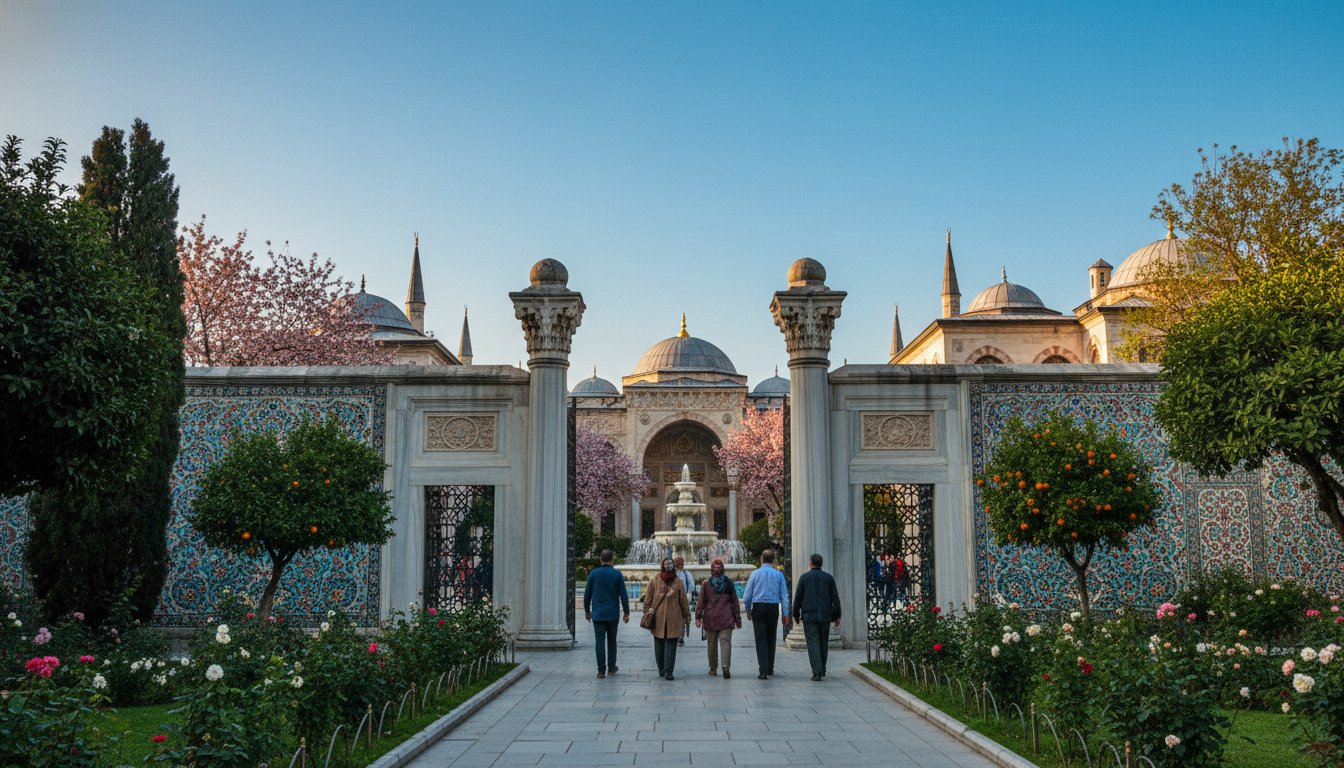
Plan smart for your visit: check Topkapi Palace Museum Tickets and availability, book skip-the-line options, and reserve the separate Harem ticket if needed.
Introduction
Topkapi Palace Museum (Topkapı Sarayı) is one of Istanbul’s most iconic landmarks. Plan your visit with Topkapi Palace Museum Tickets in advance to save time and secure Harem access—this guide covers hours, ticket options, and the best ways to avoid lines so you can make the most of your day in the city.
Located in the heart of Sultanahmet, the palace sits within easy walking distance of Hagia Sophia, the Blue Mosque, and the Basilica Cistern, making it simple to combine attractions in a single itinerary. Typical visitor routing is Hagia Sophia first, then Topkapi Palace (allowing time for the treasury and Harem), and finally the Basilica Cistern if you still have time.
Built soon after the Ottoman conquest of Constantinople and commissioned by Sultan Mehmet II, Topkapi Palace served as the dynasty’s principal residence and administrative center for roughly four centuries. Generations of sultans, viziers, scholars, and artisans shaped Ottoman history and architecture within its walls, making the site essential for anyone who wants to understand the empire’s culture and governance.
Today the Topkapi Palace Museum combines palace rooms, courtyards, treasuries, and sacred relics into an immersive visitor experience. Jump to Visitor Information for quick facts on hours, tickets (including the separate Harem ticket), and recommended guided tours and audio guides to enhance your visit.
Visitor Information
Opening Hours
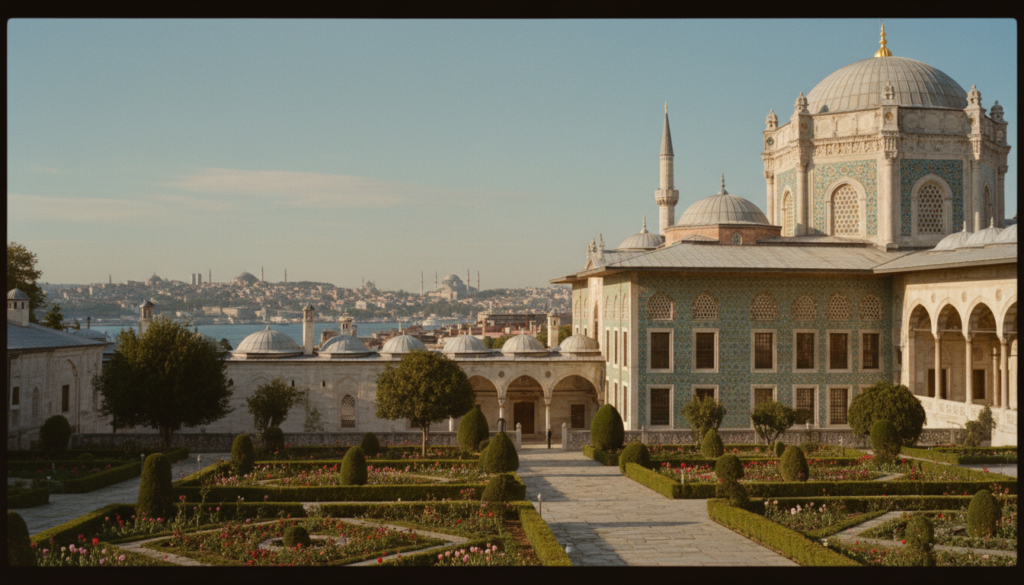
Topkapi Palace opening hours are typically 09:00 – 18:00 (last admission around 17:00). In winter months some sections may close earlier—often around 17:00—so always check the official museum website before your visit for the latest schedule. To avoid crowds and long lines, arrive at opening or book a guided tour with early entry; mornings and late afternoons in shoulder seasons (spring and autumn) are usually quieter.
Closed Days
The palace is closed every Tuesday and on certain national and religious holidays when staff carry out maintenance and conservation work. If your Istanbul itinerary includes multiple attractions (Hagia Sophia, Basilica Cistern, Blue Mosque), plan around Tuesdays to ensure you can visit Topkapi during your stay.
Tickets & Admission Fees
- 🏰 Main Palace: Entry to the main palace areas is included in the standard ticket. For faster line access consider purchasing a line ticket or skip-the-line option online.
- 🕌 Harem: The Harem section requires a separate ticket—buy this in advance if you want to visit the Harem on the same day, since availability can be limited.
- 🎟️ Combined Ticket (Topkapi Palace + Harem + Hagia Irene): Often offered as a combo by third-party resellers (price example: ~2,400 ₺). Prices and combo options change seasonally—compare palace tickets on the official site and trusted resellers before you buy.
Topkapi Palace Museum Tickets: You can buy tickets three main ways: (1) Official museum desk (on-site), (2) Official museum website (if available), or (3) Reputable resellers and guided tour operators that offer line access/skip-the-line options and combined tours. For first-time visitors we recommend booking a guided tour or renting an audio guide to fully appreciate the palace’s history and artifacts.
Audio guides and guided tours are widely available at an extra cost. Audio guides are convenient for self-paced visits; guided tours provide richer context about the Ottoman Empire, sultans, and the palace’s most important rooms.
Location
Located in Sultanahmet, Fatih, Topkapi Palace sits on the tip of Istanbul’s historic peninsula, overlooking the Golden Horn and the Bosphorus. The palace is within easy walking distance of major attractions such as Hagia Sophia, the Blue Mosque, and the Basilica Cistern, making it simple to combine visits in one day.
How to Get There
The easiest route is the T1 Tram line to Sultanahmet station; from there the palace is a 5–10 minute walk past Hagia Sophia. Many visitors walk between Sultanahmet sights, but taxis, buses, private transfers, and guided tours are available if you prefer direct hotel pick-up. If you’re short on time, choose a guided tour that includes line access to save waiting time.
Quick tips: Book Topkapi Palace tickets in advance during high season, buy the Harem ticket separately if needed, and consider a guided tour or line tickets for faster entry. For more booking options, check the Visitor Information and Practical Tips sections below.
Exploring Topkapi Palace
Topkapi Palace covers more than 66,000 m² and feels more like a walled royal city than a single building. The complex is arranged around four main courtyards, each revealing different facets of Ottoman life—from public ceremony and administration to private family spaces and imperial leisure. Plan your route in advance so you can focus on the areas that interest you most (treasury, relics, Harem, or gardens) and make the most of your Topkapi Palace visit.
First Courtyard
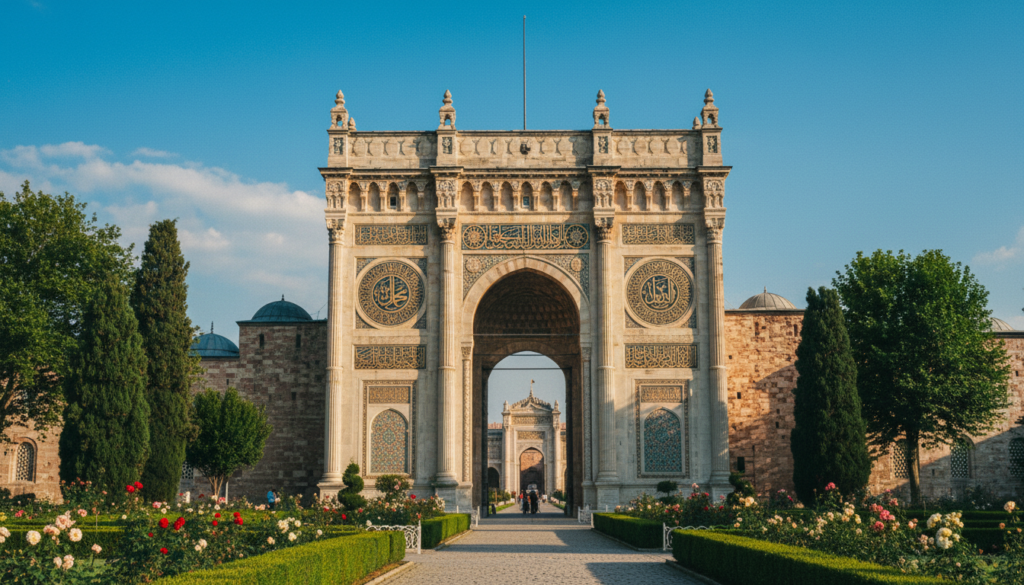
The Outer Courtyard (First Courtyard) is the palace’s public face. Enter through the ornate Imperial Gate into a broad open area that historically held service buildings, stables, and gardens. This courtyard includes Hagia Irene, an early Byzantine church now part of the museum complex, and serves as a useful orientation point at the start of your tour.
- Must-see: Imperial Gate, exterior views, Hagia Irene.
- Estimated time: 10–15 minutes.
Second Courtyard
The Second Courtyard was the administrative hub of the Ottoman state. Here you’ll find the Imperial Council Chamber (the Divan) and the historic palace kitchens, now showcasing porcelain collections from China, Japan, and Europe. The Second Courtyard also provides the primary access point to the Harem—buy that separate Harem ticket in advance if it’s on your list.
- Must-see: Divan (Imperial Council), palace kitchens and porcelain displays.
- Estimated time: 30–45 minutes.
Third Courtyard
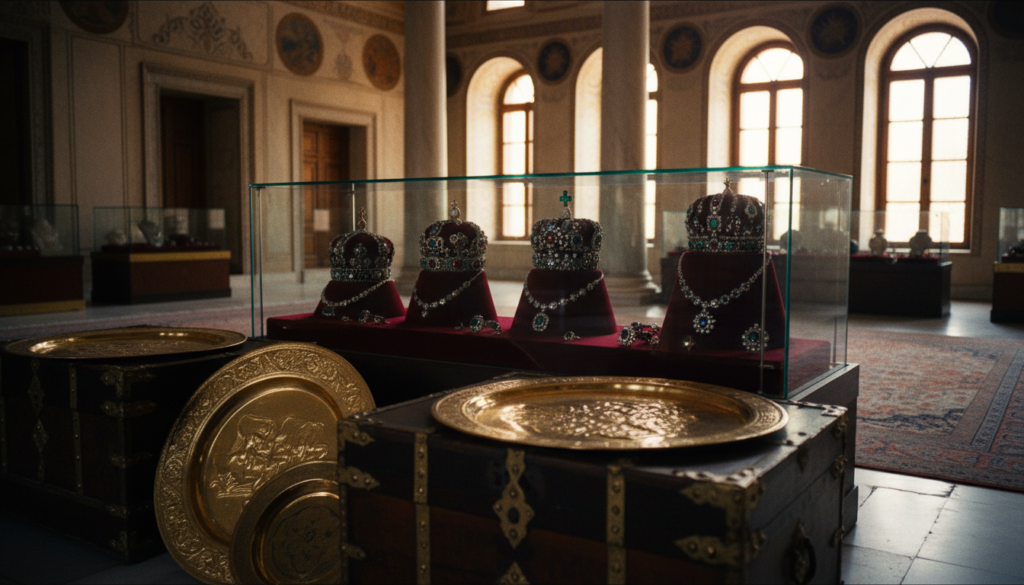
The Third Courtyard marks the transition into the sultan’s private and ceremonial domain. This is where the Imperial Treasury displays famous treasures—like the Spoonmaker’s Diamond and the Topkapi Dagger—and where the Chamber of the Holy Relics is located. If your time is limited, prioritize the Third Courtyard for its concentration of the palace’s most famous artifacts.
- Must-see: Imperial Treasury, Chamber of the Holy Relics, key jewels and ceremonial objects.
- Estimated time: 45–60 minutes (allow more if you plan to visit the Treasury closely).
Fourth Courtyard
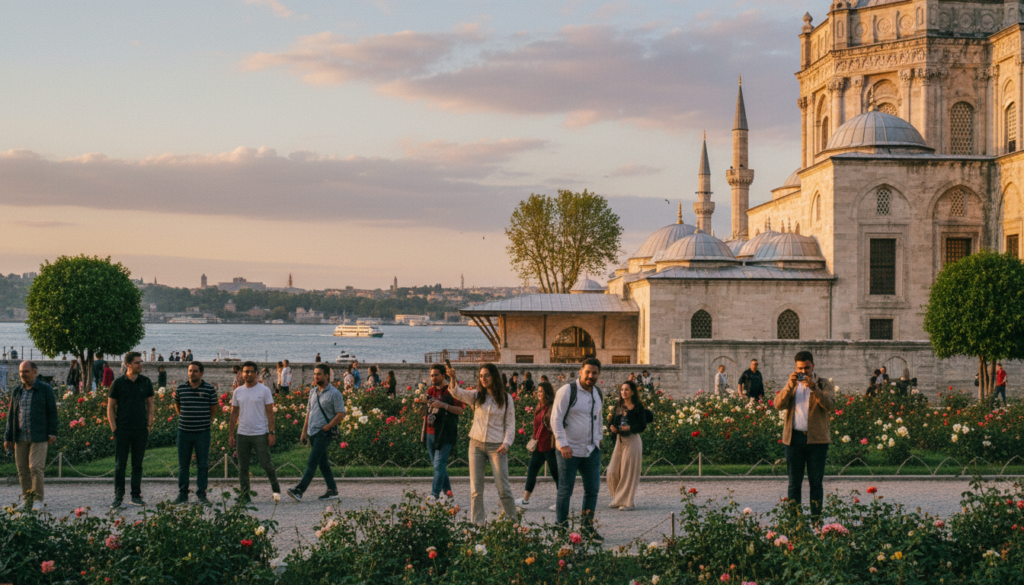
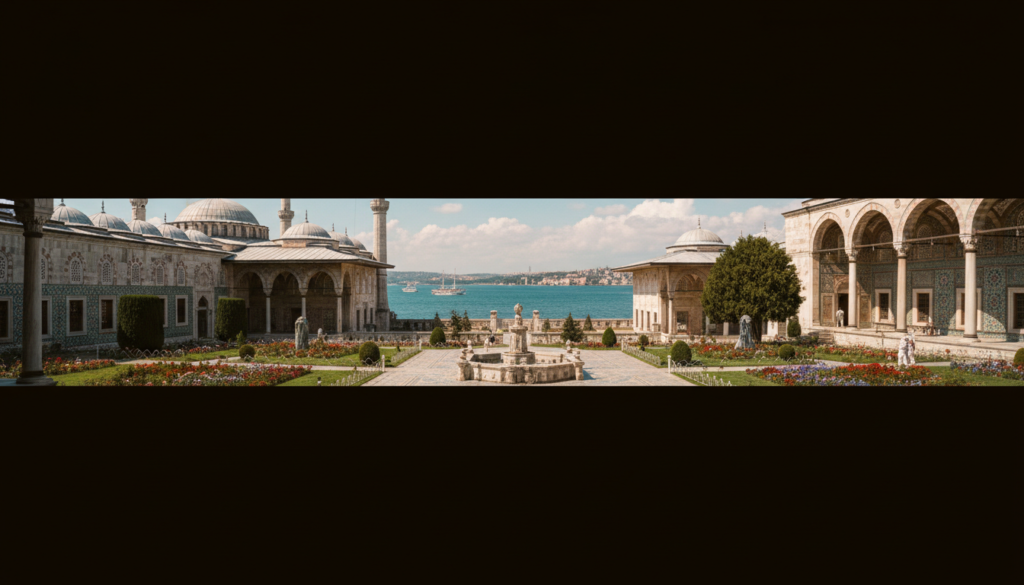
The Fourth Courtyard served as the sultan’s personal retreat and provides a peaceful end to your visit. Lush gardens, fountains, and elegant kiosks—such as the Yerevan Pavilion and Baghdad Kiosk—look out over the Bosphorus and the Golden Horn. These pavilions offer excellent photo opportunities and quiet spots to reflect on the palace’s architecture and views.
- Must-see: Yerevan Pavilion, Baghdad Kiosk, Tulip Garden views.
- Estimated time: 20–30 minutes.
Sample itineraries:
- 2 hours: Prioritize the Third Courtyard (Treasury and Holy Relics) and a walk through the Fourth Courtyard for views and photos.
- 3–4 hours: Add the Second Courtyard and the Harem (if you have Harem tickets) for a fuller picture of court life.
- Half-day: See all main courtyards, visit the Harem thoroughly, and browse detailed exhibits in the museum galleries.
Consider renting an audio guide or joining a guided tour to get historical context—the added interpretation helps you spot architectural details and understand how the courtyards relate to the lives of sultans and the Ottoman court. For maps and recommended routes, follow internal signs and ask staff for the fastest sequence to reduce backtracking. See the Visitor Information block for ticket options, line access, and tour recommendations to optimize entry.
The Harem
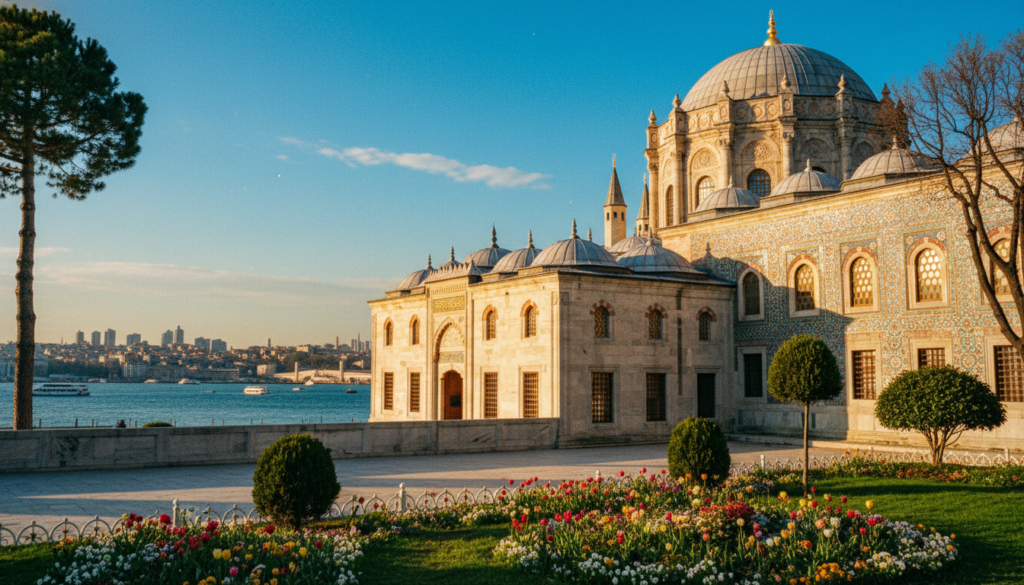
The Harem at Topkapi Palace was a self-contained social and administrative world rather than merely a private residence. Traditionally cited as containing more than 300 rooms, the palace harem included royal apartments, inner courtyards, baths, and ceremonial halls that housed the Valide Sultan (the sultan’s mother), the sultan’s wives and concubines, and the eunuchs who managed daily life and security. Visiting the Harem offers a rare window into the private side of Ottoman court life and the relationships that shaped succession and politics.
The harem’s interiors display exquisite İznik tilework, ornate wooden ceilings, and gilded decoration. Notable spaces include the Queen Mother’s Apartment, the Hall of the Concubines, and the ceremonial Golden Road, each revealing different aspects of court ritual and domestic life. For deeper interpretation, consider hiring a guide or renting an audio guide that focuses specifically on the Harem’s social history.
Harem at a glance
- Ticket: Separate Harem ticket is required—buy in advance when possible; availability can be limited.
- Typical visit time: 45–90 minutes to explore thoroughly.
- Best time to go: Arrive early or late afternoon to avoid the busiest periods.
- Accessibility: Narrow passages and steps mean limited accessibility in parts—contact the museum ahead if you need assistance.
- Photography: Rules vary by room—follow posted signs and staff instructions; no-flash rules often apply.
Recommended route
- Enter from the Second Courtyard and begin at the Queen Mother’s Apartment to see the most ornate private rooms.
- Walk the Golden Road to view ceremonial procession spaces and decorative ceilings.
- Visit the Hall of the Concubines and the inner courtyards to understand daily life and circulation patterns.
Practical notes: If you can’t manage the stairs or narrow corridors, look for guided tours or audio tours that offer condensed Harem summaries or virtual explanations. Many guided tours include Harem access—check tour descriptions carefully before booking to ensure Harem entry is included. Buying Harem tickets as part of a trusted combo or through a reputable reseller can guarantee entry on busy days.
For visitors focused on Ottoman history and court life, a Harem-focused guide will enrich the story behind the rooms and help pinpoint the architectural and social details that defined life behind the palace walls.
Holy Relics in Topkapi Palace
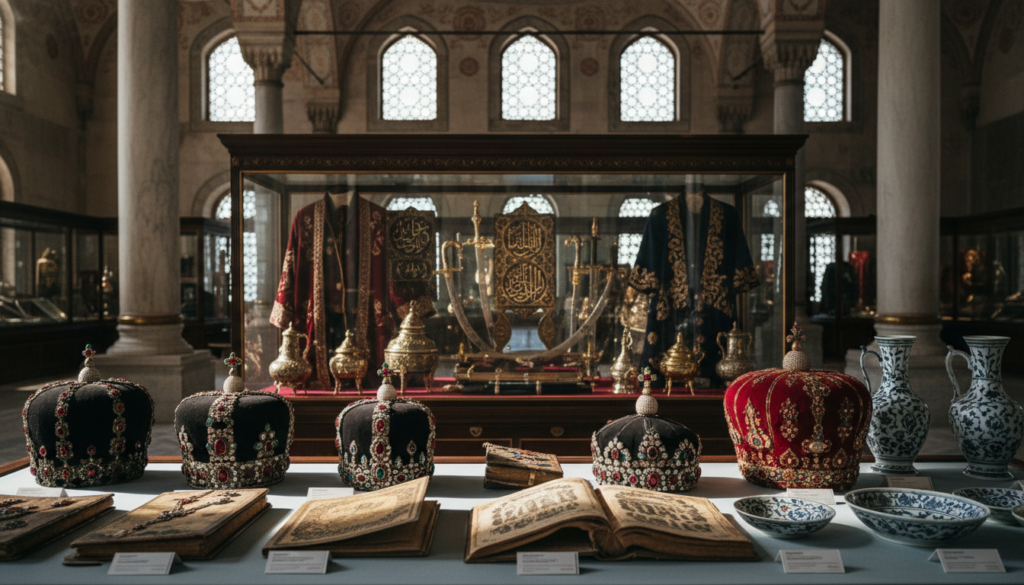
One of Topkapi Palace’s most significant collections is the Sacred Relics Collection, held in the Chamber of the Holy Relics. According to the museum’s inventory and traditional descriptions, the collection contains objects traditionally attributed to prophets and early religious figures and is regarded as one of the most important assemblies of relics in the Islamic world.
- 🧥 Items traditionally linked to Prophet Muhammad, such as a cloak and personal belongings (catalogued as relics of the Prophet).
- 🪄 Objects described in the museum catalog as associated with biblical figures—for example, an item listed as the Staff of Moses.
- ⚔️ Relics traditionally named after other prophetic figures, such as objects catalogued as the Sword of David and the Turban of Joseph.
- 🍲 Assorted devotional items and objects connected by tradition to Abraham and other revered figures.
These relics are displayed in a specially maintained chamber where a solemn atmosphere and careful presentation underscore their religious significance. Visitors—both historians and pilgrims—often treat the Chamber of the Holy Relics as a space for reflection as well as study.
Relics at a glance
- Viewing rules: Low voices and respectful behavior required; flash photography is typically prohibited and some items/rooms may ban photography entirely.
- Typical visit time: 15–30 minutes, depending on crowding and rotation of exhibits.
- Access: The Chamber’s display can be rotated or temporarily closed for conservation—always check current access before you go.
Visitor notes: Guided tours that include the Chamber or a specialized audio guide focused on the relics offer useful interpretation and context. If the Sacred Relics Collection is a priority, confirm its availability when you book tickets or a guided visit to avoid disappointment.
See the Visitor Information section for hours, ticketing options, and recommended guided tours that include the Chamber of the Holy Relics to ensure entry on the day you visit.
Unique Highlights in Topkapi Palace
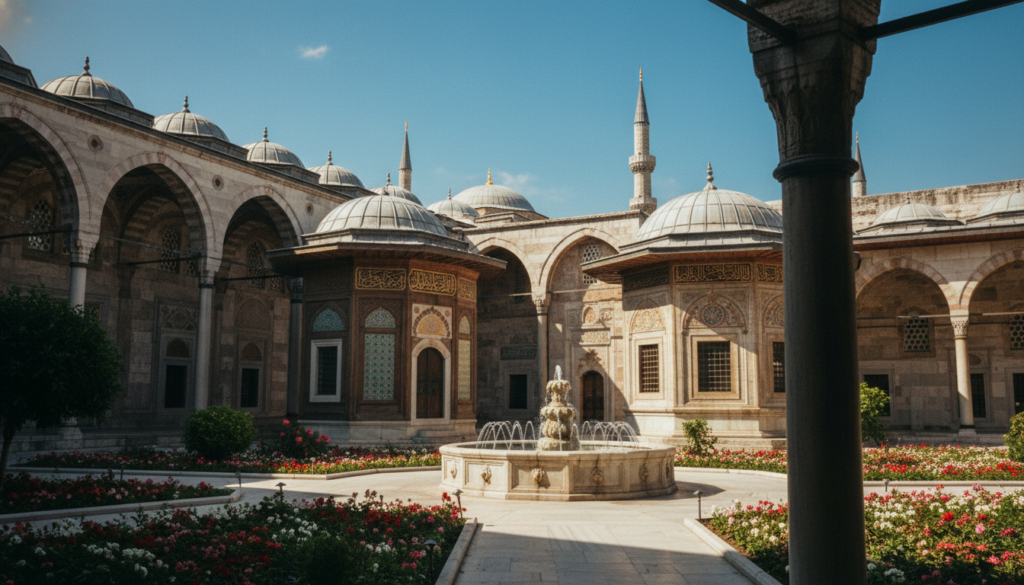
✨ Circumcision Room (Sünnet Odası)
Why it matters: Traditionally dated to the 17th century (often cited as 1640), this ceremonial room was used for princes’ circumcision rites and showcases blue-and-white İznik tiles and intricate decorative motifs—an excellent example of Ottoman ceremonial architecture and tilework.
Best time to see: Early in the day to avoid crowds. Photography: Check signage—some rooms restrict photography.
💎 Imperial Treasury
Why it matters: The Imperial Treasury houses some of the palace’s most famous treasures, including the celebrated Spoonmaker’s Diamond and notable objects such as the emerald-encrusted Topkapi Dagger. These objects illustrate the wealth and material culture of the Ottoman court.
Best time to see: Start your visit here early to avoid crowds. Photography: Often restricted; items can be rotated for conservation—check current displays before you go.
🌿 Gardens & Kiosks
Why it matters: The Fourth Courtyard’s kiosks—like the Yerevan Pavilion and Baghdad Kiosk—offer elegant pavilion architecture and panoramic views over the Bosphorus and Golden Horn, providing serene spots after the more crowded galleries.
Best time to see: Late afternoon for warm light and quieter terraces. Photography: These outdoor areas are generally the best for photos.
📜 Museum Exhibits
Why it matters: Beyond jewels and kiosks, the museum displays imperial costumes, fine calligraphy, illuminated manuscripts, and historic weapons that illuminate daily life and governance in the Ottoman court—key material for anyone studying Ottoman history.
Best time to see: Midday, when indoor galleries are open but galleries may be less crowded between morning and late-afternoon tour groups. Interpretation: Join a themed guided tour or use an audio guide to get fuller context.
Note: Dates, display locations, and accessibility of highlights (for example, the Circumcision Room and certain Treasury objects) can change for conservation reasons—check ticket and tour options in advance and respect signage in restricted areas. For a deeper experience, book a highlights-focused tour or an audio-guided experience that covers the Treasury and key exhibits.
Practical Tips

- 🕰️ Best time to visit Topkapi Palace: Arrive at opening (09:00) to avoid the longest lines; shoulder seasons (spring and autumn) offer milder weather and fewer crowds than summer. Early mornings also provide the best light for courtyard and kiosk photos.
- ⏳ Time needed: Plan for at least 3–4 hours to see the main courtyards, Imperial Treasury, and a selection of exhibits; add 45–90 minutes if you want to tour the Harem thoroughly. For a relaxed experience including gardens and detailed galleries, reserve a half day.
- 🎟️ Booking & lines: Buy Topkapi Palace tickets in advance during high season. Options include the on-site ticket desk, the official museum website (when available), or reputable resellers that offer line tickets and skip-the-line access—these line access options can save significant waiting time. If you need same-day Harem entry, purchase the Harem ticket early as availability is limited.
- 🎧 Guided tours & audio guides: Guided tours provide expert context on Ottoman history and the palace’s highlights; audio guides are perfect for self-paced visitors. Compare guided tours and audio guide options to find ones that include line access or combined-site itineraries (Hagia Sophia + Topkapi + Basilica Cistern).
- 👗 Dress & conduct: Dress modestly when visiting sacred areas (Chamber of the Holy Relics) and keep voices low. Do follow staff instructions, respect rope barriers, and observe no-flash rules. Don’t touch displays or use flash photography in restricted rooms.
- 📸 Photography: Photography is allowed in many palace areas but is often prohibited in the Chamber of the Holy Relics and some Treasury displays—always follow posted signage. For the best photos, prioritize the Fourth Courtyard kiosks and exterior viewpoints.
- ☕ Facilities & comfort: Cafés, rest areas, and gift shops are on-site. Wear comfortable shoes for walking on uneven stone and stairs, bring water in warm months, and take breaks in shaded kiosks.
- ♿ Accessibility: Historic stairs and narrow passages limit access in some areas. Ramps and alternate routes exist in parts of the complex—contact the museum ahead of your visit to confirm accessible entrances and assistance options.
Quick at-a-glance checklist
- Book: Topkapi Palace tickets + separate Harem ticket if needed.
- When: Arrive at 09:00; shoulder seasons best for lower crowds.
- Bring: Water, comfortable shoes, small bag (check restrictions), and a charged phone/camera.
- Consider: Audio guide or guided tour for deeper context and faster entry.
Pairing & routing tip: For an efficient day in Sultanahmet, start at Hagia Sophia in the morning, walk to Topkapi Palace mid-morning, and finish with the Basilica Cistern—this order minimizes backtracking and helps you avoid peak lines. If you prefer an evening plan, many visitors pair daytime sightseeing with a Bosphorus dinner cruise.
Final pro tip: If you’re short on time, choose a guided tour that includes line access and a highlights-focused itinerary (Treasury + Harem + Holy Relics) to maximize your Topkapi Palace experience.
Conclusion

Topkapi Palace Museum Tickets are your gateway to an immersive encounter with Ottoman history, court life, and extraordinary architecture. From the private Harem chambers and Divan halls to the glittering Imperial Treasury and the Chamber of Holy Relics, every courtyard and room adds important context to the empire’s story. Located in Sultanahmet within walking distance of Hagia Sophia and other major attractions, Topkapi Palace is a must-see site for any visit to Istanbul.
Plan smart: Book topkapi palace tickets in advance (especially Harem tickets), arrive at opening to avoid the longest lines, and allow 3–4 hours—or a half day—for a full experience. Consider a guided tour or an audio guide to deepen your visit and make the most of your entry and access. If you only have a short window, prioritize the Third Courtyard (Treasury and Holy Relics) and a quick walk through the Fourth Courtyard for views.
Check current opening hours and ticket options now to reserve your entry and Harem ticket if needed — booking ahead saves time and guarantees access on the day you visit.